Story Behind the Book
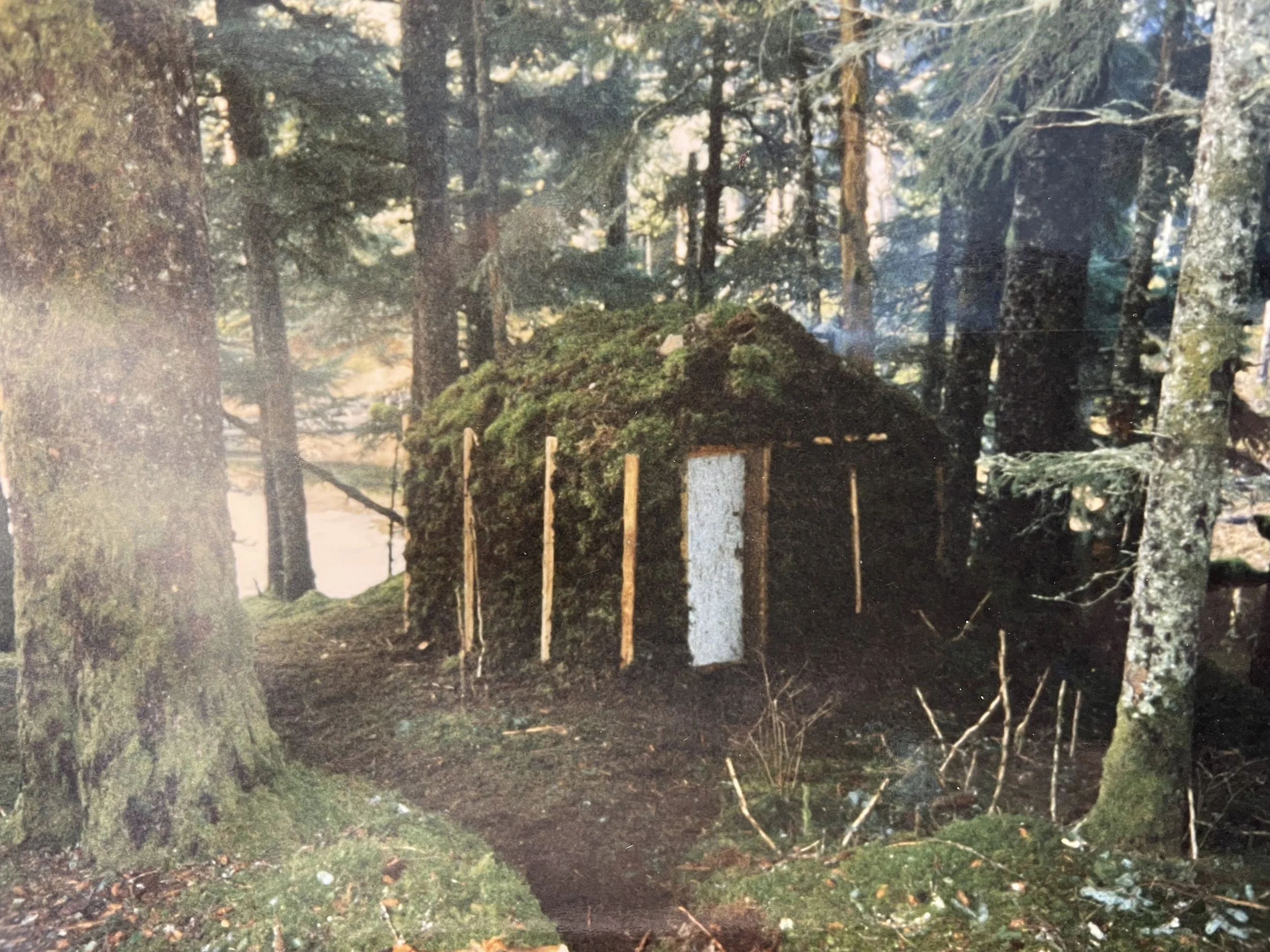
My cabin on Spruce Island in Alaska.
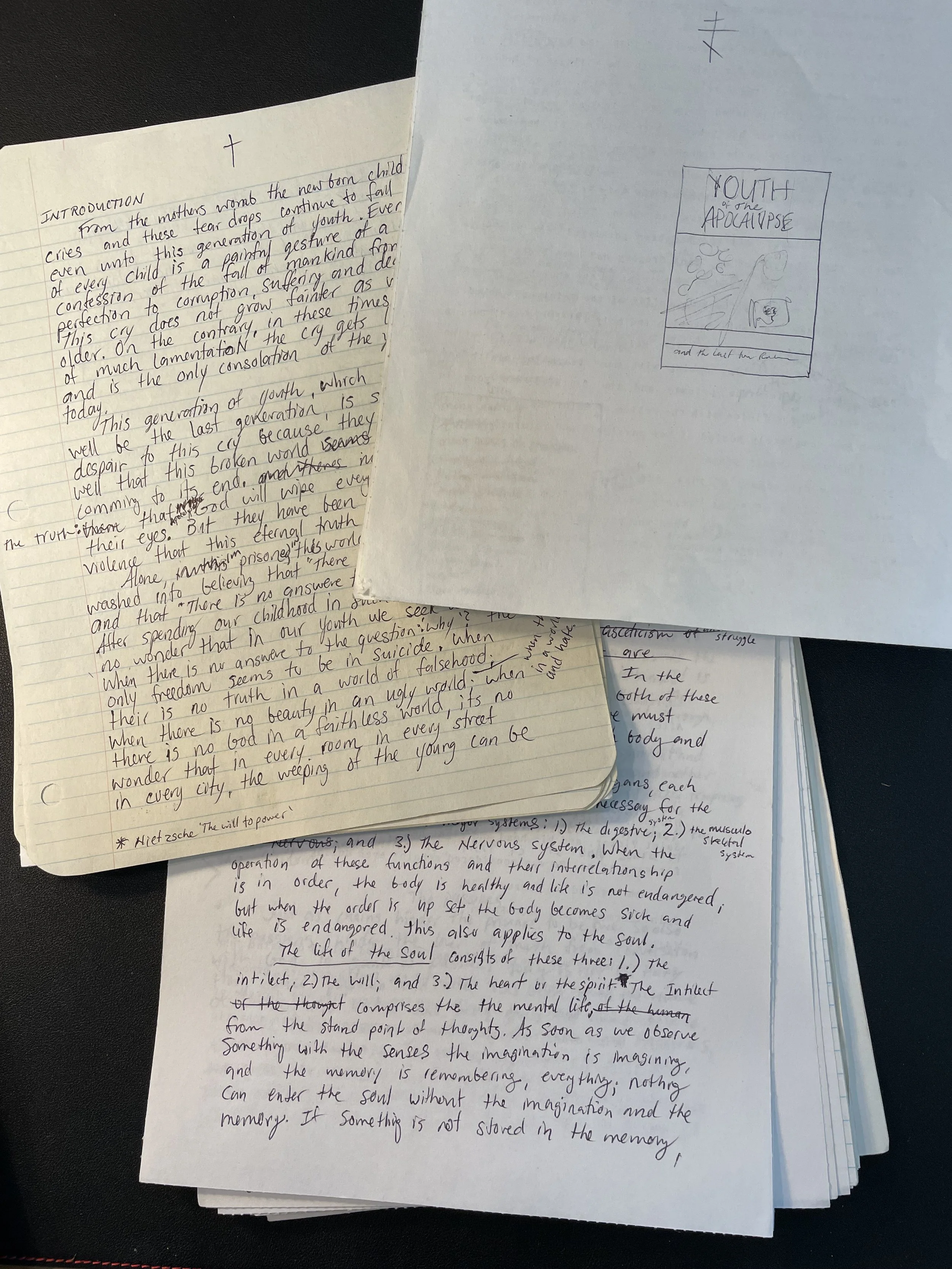
Original manuscript.
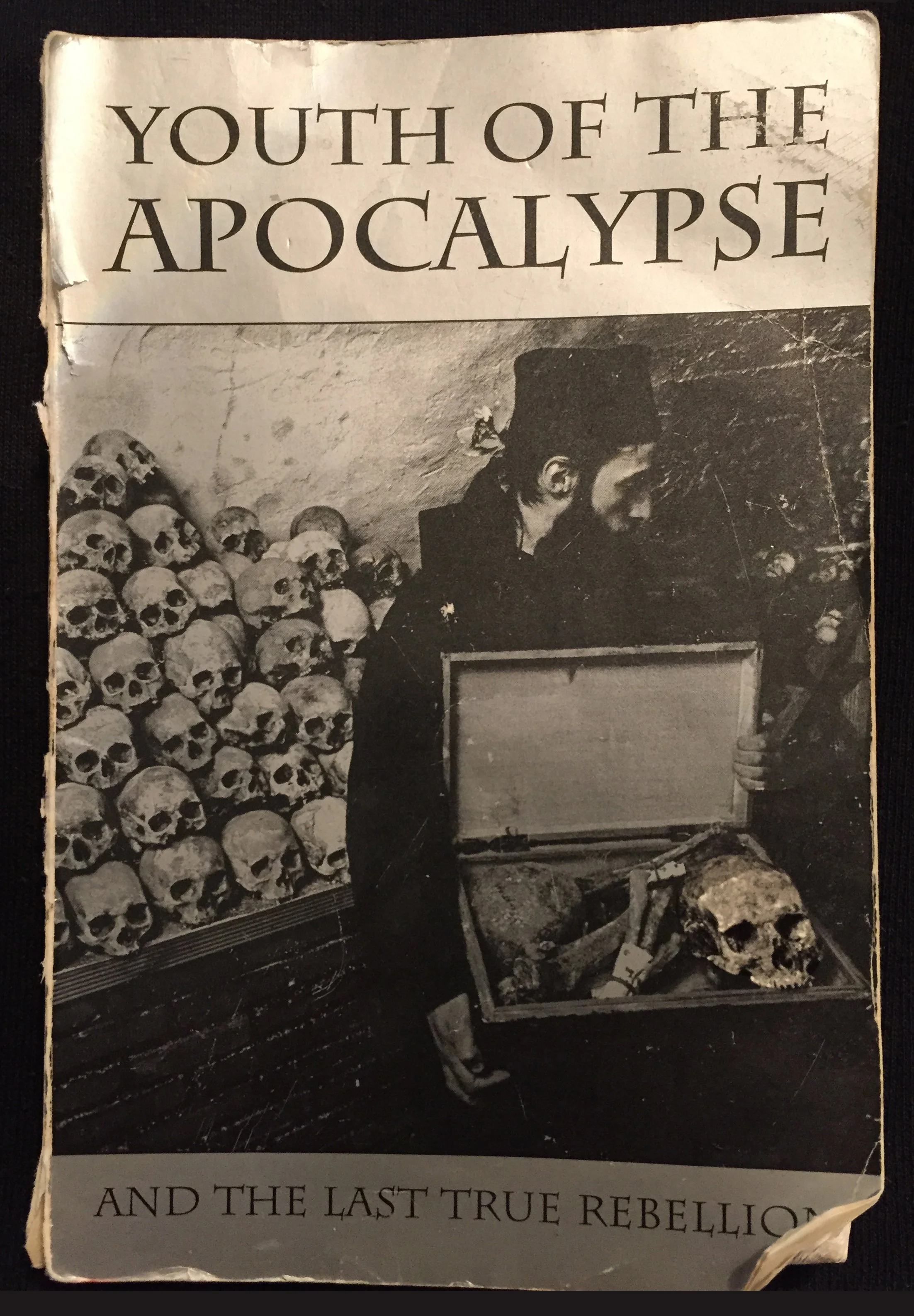
First edition of Youth of the Apocalypses from 1996.
When I was 23 years old and had been living in the monastery as a monk in training for three years, I found myself in a remote hermitage on the deserted end of an Alaskan island with no running water, no electricity, and with only the basic means of survival. I was separated from the nearest town by miles of volatile ocean waters, and the only way out was by traversing the ocean in an old wooden boat, or walking miles through the deep, boggy forest. During the day, with the other monks, I would chop firewood, put up fish for the winter, conduct the monastery cycle of prayers, and retire at night to a small cabin a stone’s throw away from the ocean. The lifestyle was extremely arduous, both physically and mentally, but produced a contentment I had never known before.
The contrast of this simple monastic life compared to where I was just three years prior was stark and surreal. Back then I was living in the San Francisco Bay Area, on the streets and in warehouses with like-minded lost young people. We were disillusioned by conventional life, the status quo and all the emptiness offered by the “American dream.” By day I was a musician, and at night I would cut myself with razor blades and cry out to God for answers and direction.
Growing up, I was the average kid—a product of a broken family and modern American pop culture. It seemed as if I had been in survival mode since the age of three. When my parents divorced, my whole world imploded.
One of my earliest memories is being asked by my stepmother if I believed in God. I said I didn’t know what she was talking about. She suggested I ask God into my heart and I did. Although that was a good step, it seems like it was downhill from there. I was raised mostly by my well-intentioned father and stepmother, but in a blur of alcoholism, drug use, neglect, tension, and fighting, with a dash of religion just for good measure. Like many kids, I was raised with absolutely no point of reference for understanding the world. Because of this, I was restless and confused, with an ever-increasing inner despair. Growing up in a broken home, I saw a world filled with purposelessness, fighting, injustice, fear, chaos, lies, and very little love.
This drove me to seek answers in books. I started building my library in my teenage years, driven by the desire to understand the world and to find meaning and purpose in it. I would spend hours combing through bookstores in a desperate search for some semblance of meaning. I looked to books on science but found only physical principles and interesting explanations of the natural world. I browsed the self-help sections and found many competing and confusing opinions from all sorts of self-proclaimed experts, but once I entered the religion and philosophy sections, I discovered a treasure trove of big ideas and endless possibilities. This became my favorite aisle.
Over time, my sorrow and instability grew. When I turned eighteen, I packed up my books and set out on a journey to find purpose, happiness, and love. I wandered from my small hometown into the dark alleys and shadows of the big inner city where I saw the world with all of its glitter and gore. I was homeless for a few months, slept on floors and couches, eventually lived with some crazy people involved in the occult, and ate from dumpsters. My sole concern was simply to survive. I occupied myself by playing in punk and heavy metal bands, reading books on philosophy and religion, and wandering the streets with friends. I was mugged, dodged bullets from gang wars, narrowly escaped brushes with prostitution, and had a series of wildly dysfunctional relationships that were based on lust and insecurity. Through it all I managed to maintain a firm belief in God.
Through a series of events, I ended up in a religious bookstore in Northern California. Here I encountered an Orthodox nun who challenged my view of the world. Through her I learned about Church history, theology, the lives of saints, and monasticism. The moment I realized that I could visit a monastery, I packed my bags and walked through the monastery gates in the wilderness of Northern California.
It took me about a year to process and dispose of all the garbage and trauma that my soul had accumulated. After a couple of years of struggling in the monastic life I was asked if I wanted to go to Alaska. I was thrilled to have the opportunity to live at this remote island monastery.
That winter, there was just one other young monk and myself carrying on monastic life on the southern end of the island. Due to Alaska being so far north, the daylight hours were few, so I took advantage of the darkness by reading and writing. During the day we often discussed the plight of modern youth and how to build bridges of support. At the time, I was writing an article about how nihilism and relativism were destroying the soul of the younger generation. I didn’t have a computer or a typewriter, but I did have a ream of paper. Writing by hand and by candlelight, in a small cabin in the middle of nowhere, far from the tumult of urban life, the article turned into a large manuscript. The end result was this book, Youth of the Apocalypse.
You are holding the second edition of this book. After thirty years, I have added new chapters and made improvements to the original text. Both the first and second editions were written for you.
Justin Marler, May 2024